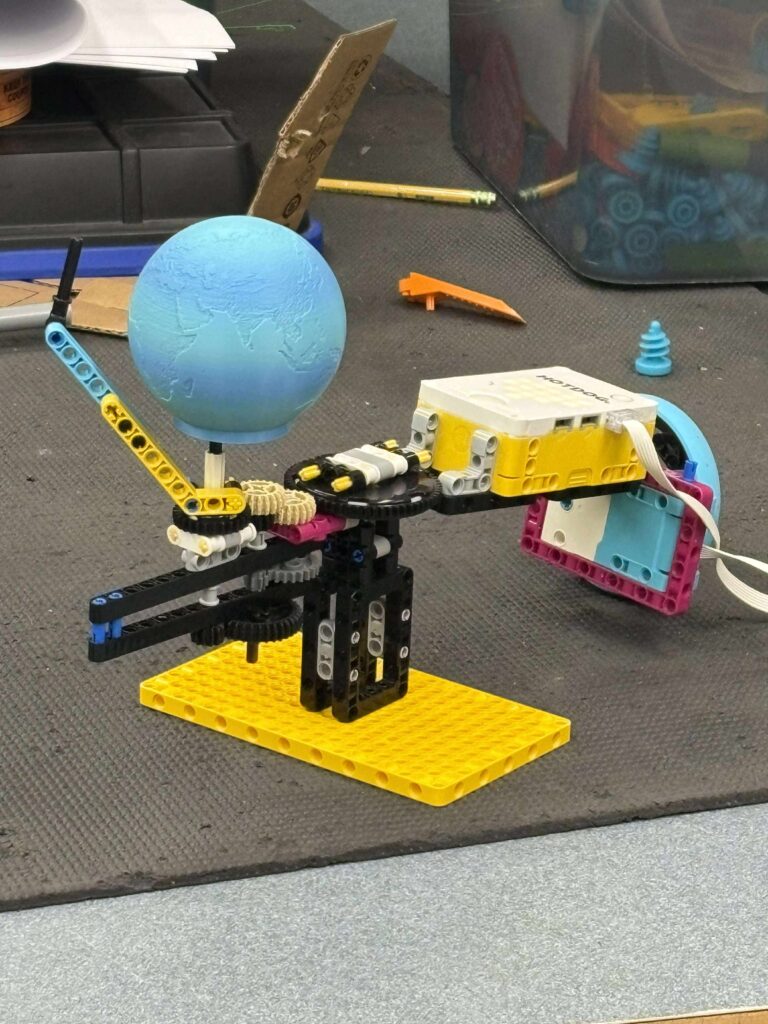
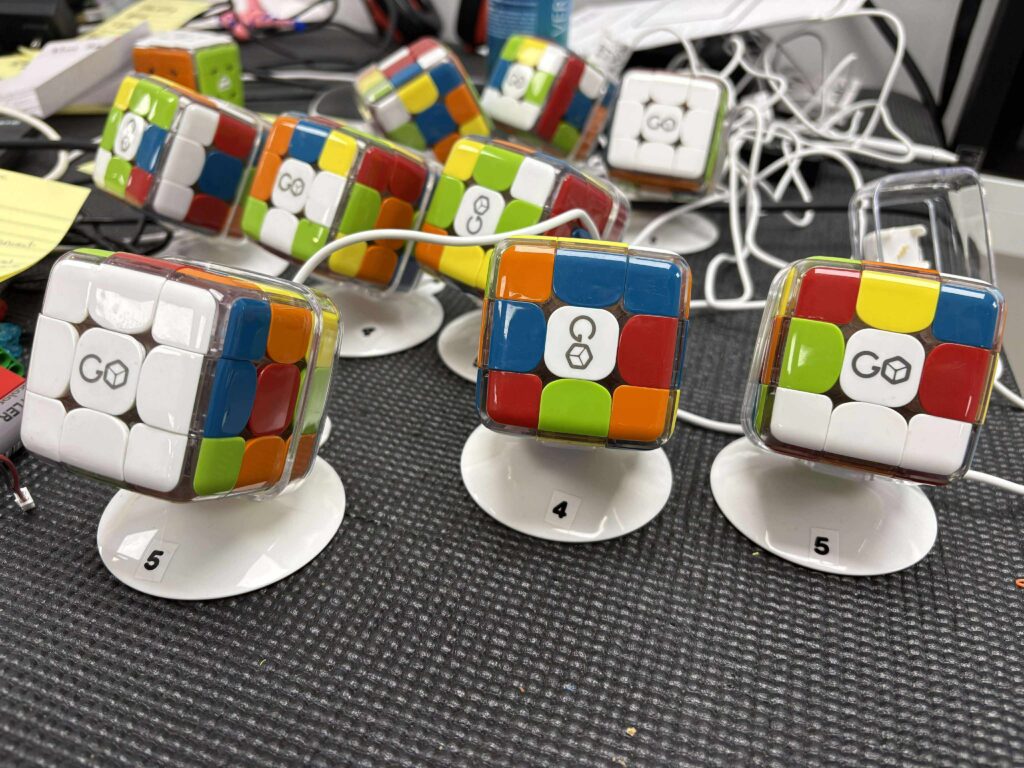
The Design Lab is a flexible technology space where students and teachers can access a wide range of tools, including coding stations, robots, digital cutters, circuits, building materials, and interactive devices. It reflects Innovation in Education by integrating technology with active learning. Instead of technology being limited to screens, students interact with tools that require thinking, planning, testing, and revising.
What Stood Out to Me
- Student engagement: The tools naturally invite exploration and experimentation.
- Variety of resources: From robotics to digital design, the Lab offers tools adaptable for different ages and learning goals.
- Authentic problem solving: Students are encouraged to try an idea, evaluate what worked, and make changes. This iterative process supports deeper thinking and sustained inquiry.
Activities I Explored
During the visit, I explored tools that could work well with elementary students and started imagining how they might shape real learning experiences. One tool that stood out was the Cricut cutter. At first it looked like a simple crafting machine, but the more I used it, the more I realized how much mathematical thinking it can support. A task as small as resizing a sticker becomes an opportunity to talk about length, perimeter, precision, and even problem solving when the first cut does not turn out as expected.
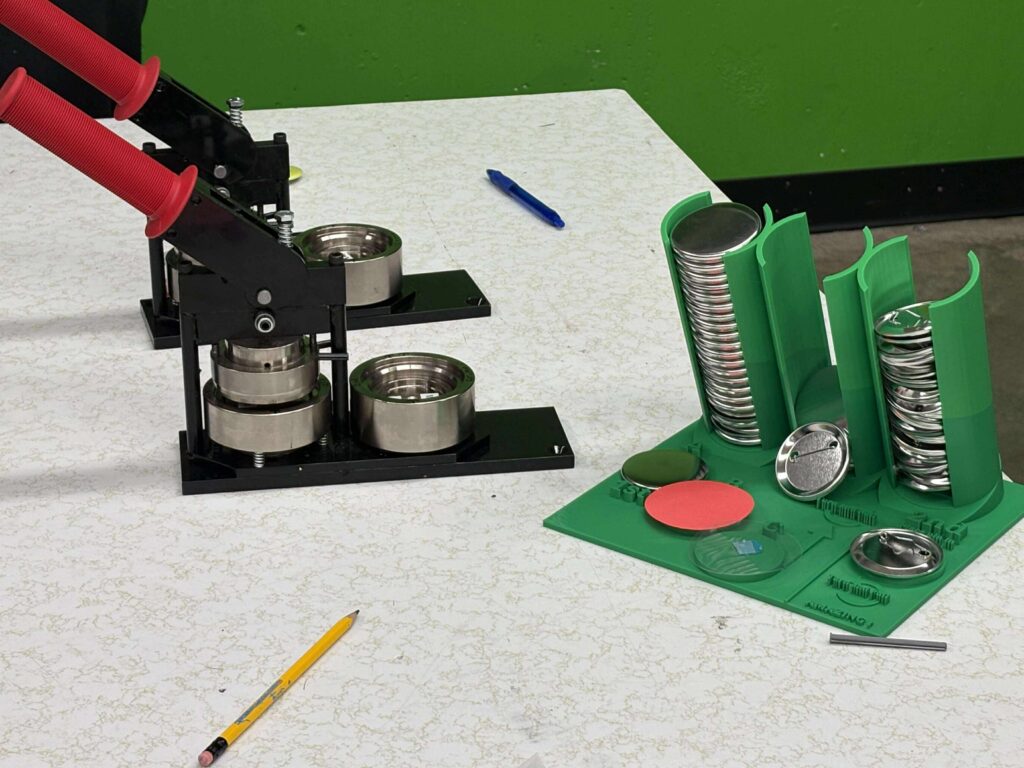
I also spent time making buttons, which was surprisingly engaging. I can see this becoming a creative classroom activity where students design symbols that represent themselves, a story character, a classroom value, or a science concept. Button making could support visual communication, planning, and revision as students test different layouts or colours before finalizing their design.
How I Envision Using This Space
I think the strongest aspect of the Design Lab is its potential to support long term, cross curricular projects. The space encourages blending subjects such as math, literacy, science, and physical education. By encouraging students to measure, design, write, test, and reflect within the same project, the Lab supports deeper learning. It also fosters collaboration by allowing students to work together and learn from each other’s ideas. This aligns with the ISTE standards by encouraging educators to explore new practices, guide students in responsible technological participation, and collaborate to improve teaching and learning.
Future Classroom Project Idea
As I think ahead to how I want my classroom to feel, I keep imagining projects that connect hands-on exploration with creative problem solving. A geocaching unit is one that I keep returning to. It blends mapping, measurement, clue writing, and physical movement in a way that is engaging for primary learners. Students could practice interpreting coordinates, navigating pathways on the school grounds, and even designing their own geocaches for classmates to discover.
What excites me is how naturally the Design Lab fits into this kind of work. Rather than treating the Lab as a separate space, I can see it becoming an extension of my classroom. Students could design and cut location markers with the Cricut, create digital clues or simple animated hints, and experiment with tools that help them think about space, distance, and direction. As I continue developing my teaching practice, I see the Design Lab as a valuable space for building meaningful, student centered projects.