Introduction
This week our cohort partnered with a local elementary school to host an Innovation Hour event, bringing technology focused learning to students. The goal was to introduce children to hands on innovation in a way that felt playful, accessible, and exciting. We were reminded that a day like this mirrors the real pace of teaching because we constantly adjusted, pivoted, and reset our stations as groups shifted and needs changed. The experience gave me meaningful practice working directly with diverse learners while using tools that extend well beyond traditional classroom routines.
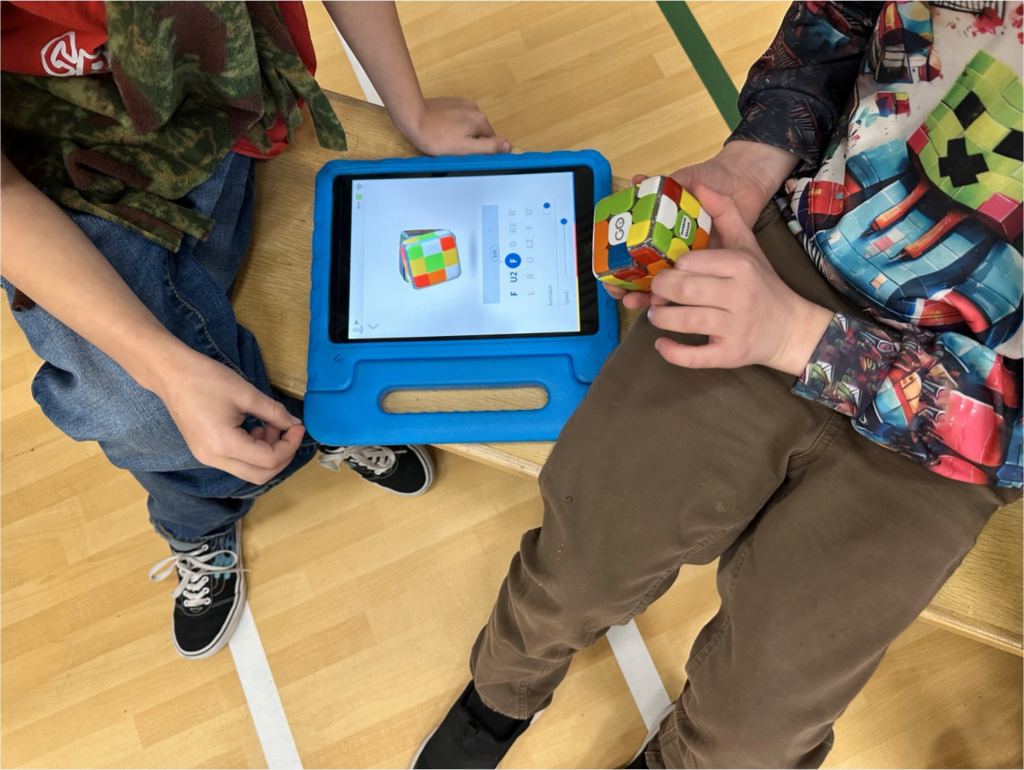
I worked with students across the K to 6 range, which meant adapting the level of support and complexity throughout the day. Younger students often needed more modelling and step by step prompting, while older students were comfortable experimenting and troubleshooting on their own. Moving between these developmental stages was a helpful reminder of how much variation exists in a single school community and how important flexible planning is for technology rich activities.
Working with K to 6 Learners
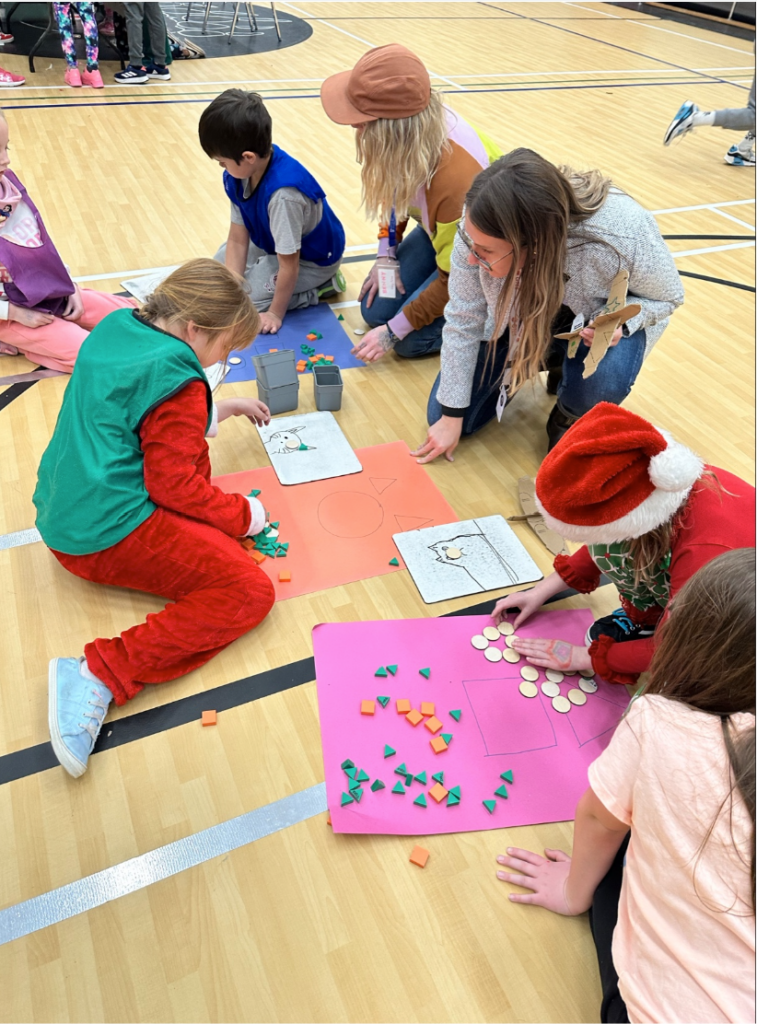
For this event I helped run the Unplugged Activity station, which I facilitated twice in a row. The activity followed a three-part rotation. At station A, students drew a simple picture on a small whiteboard. That board then moved to station B, where a second group added specific shapes on top of the drawing. From there the board moved to station C, where students matched the shapes to slips of paper containing chunks of a word. After three rotations, each group collected all the word segments they needed and combined them to form a complete word. Even though the task involved no digital tools, the underlying goal was to encourage students to “think like a computer” by following sequences, transferring information, and recognizing patterns.
The activity worked well for older intermediate students, who had the processing time and reading fluency to follow the steps quickly. The younger primary students found it more challenging. The fifteen-minute rotation was too short for the level of explanation they needed, especially in a loud and crowded gym. Many students were unsure of what to focus on, and some erased their letter segments without realizing that those marks were essential. In a classroom setting, with thirty minutes instead of fifteen, the activity would likely run far more smoothly. More time would allow for clear modelling, repeated instructions, and a calmer learning environment.
Throughout the morning we adapted the stations to support student understanding. At station B, the papers on the floor originally had no example shapes, so we drew the shapes directly onto them to guide students’ decisions. At station C, we simplified the matching process by removing extra papers and limiting the choices to three baskets. This reduced confusion and helped students focus on identifying the correct word parts. If I were to run this activity again, I would assign an additional helper to station A to ensure that students knew not to erase the letters when the boards returned to them.
Professional Learning From the Event
Innovation Hour helped me practice skills that are essential for teaching with technology. I needed to communicate clearly, reset materials quickly, troubleshoot when tools didn’t work as expected, and guide students through challenges without taking over their thinking. I also learned the value of preparing activities that work for a wide range of learners but still leave room for creativity. The event reinforced something I have noticed in previous weeks: students feel capable when they can explore an idea with their hands and see immediate results.
Innovation Hour also strengthened my confidence in managing organized chaos. At moments the room felt busy and loud, but productive energy filled the space. Seeing students so engaged reminded me why innovation matters in education, not for the tools themselves, but for the way those tools open pathways for problem solving, imagination, and collaboration.